Some cosmic events happen on repeat—seasons, eclipses, meteor showers. But sprinkled across the universe are one‑time only shows: brief, violent, or delicate events so rare and so distant that no human civilization will ever witness the exact same spectacle twice. These are the universe’s “you-had-to-be-there” moments, written in gravity, light, and time itself.
This is a tour of the most fleeting, spectacular acts in the cosmos—and five mind-bending discoveries that reveal just how wild these events really are.
When Stars Detonate: Supernovas That Rewrite the Sky
When a massive star dies, it doesn’t quietly fade out; it detonates in a supernova bright enough to outshine an entire galaxy for days or weeks. For a brief moment, as its core collapses and its outer layers blast into space, the star becomes one of the brightest objects in the observable universe.
Supernovas are not just dramatic; they’re creative. That flash is the moment heavy elements are forged—gold, uranium, iodine, and the iron in your blood. Those elements are then flung into space, seeding gas clouds that will later form new stars, planets, and perhaps life. Astronomers can sometimes spot the remnants of ancient supernovas as expanding shells of energized gas, like the Crab Nebula, which is the fossilized aftermath of a star that exploded in the year 1054 and was recorded by observers in China and the Middle East.
Because stars live for millions to billions of years, catching one in the act of exploding is statistically unlikely. Each supernova we observe is unique: a specific star, in a specific environment, at a precise moment in cosmic history. Some, called Type Ia supernovas, have become essential tools for measuring cosmic distances—and even led to the shocking discovery that the universe’s expansion is accelerating. Others, like “superluminous” supernovas, are still pushing models of how extreme a star’s death can be.
Amazing Fact #1: The 1987A supernova in the Large Magellanic Cloud was so bright that observers in the Southern Hemisphere could see it with the naked eye. Neutrinos from the explosion hit detectors on Earth hours before the light brightened, offering rare, direct evidence of a star’s core collapse in real time.
Cosmic Collisions: When Black Holes and Neutron Stars Merge
Space isn’t empty; it’s a traffic system for stars, black holes, and the ultra-dense stellar corpses we call neutron stars. Over millions or billions of years, some of these compact objects spiral toward each other, radiating away energy as ripples in spacetime known as gravitational waves. In their final moments, they collide in a fraction of a second—releasing more power than all the stars in the observable universe combined, but only briefly.
These events are invisible to our eyes, but not to our instruments. In 2015, the LIGO observatory made history by directly detecting gravitational waves produced by a pair of merging black holes more than a billion light-years away. That wobble in spacetime was so tiny that it changed the length of a 4‑kilometer arm by less than one‑thousandth the diameter of a proton, yet it carried the signature of two black holes smashing together.
A different kind of collision—neutron star mergers—has become even more intriguing. When two neutron stars collide, they not only send out gravitational waves but also produce a brilliant flare called a kilonova. This is where some of the universe’s heaviest elements, including much of the gold and platinum on Earth, are thought to be created.
Amazing Fact #2: The 2017 neutron star merger GW170817 was the first cosmic event ever observed in both gravitational waves and light. Telescopes across the world watched as the kilonova faded over days, confirming that such collisions are factories for heavy elements.
Gamma-Ray Bursts: The Universe’s Flashbulbs
Gamma-ray bursts (GRBs) are the most energetic flashes of electromagnetic radiation ever observed. In seconds, they can release as much energy as our Sun will emit in its entire 10‑billion-year life. Some are caused by the collapse of massive stars into black holes, others by the mergers of compact objects. Either way, they are brief, ferocious, and distant.
From Earth, GRBs arrive as a sudden spike of high-energy gamma rays, often lasting anywhere from a few milliseconds to a couple of minutes. After the initial flash, a fading “afterglow” in X-ray, optical, and radio wavelengths lets astronomers study the wreckage. Because they are so bright, GRBs can be detected across enormous cosmic distances, acting like celestial lighthouses that illuminate the early universe.
What makes each GRB essentially unrepeatable is its setup: the mass of the star, its environment, the angle of its narrow relativistic jets relative to Earth, and the exact microphysics of its collapse. The probability of a second event with the same conditions, at the same place, is effectively zero.
Amazing Fact #3: In 2008, NASA’s Swift satellite detected a gamma-ray burst (GRB 080319B) so bright that if you had been outside under very dark skies, you might have seen it briefly with your naked eye—despite it being about 7.5 billion light‑years away.
Stellar Tidal Disruptions: When a Star Gets Shredded by a Black Hole
Not every black hole quietly feeds on gas. Sometimes a wandering star strays too close and is torn apart in a spectacular tidal disruption event (TDE). The black hole’s gravity stretches the star like cosmic taffy; some of the gas is flung away, while the rest spirals inward, heating up and glowing intensely across the electromagnetic spectrum.
To telescopes, a TDE looks like a sudden flare from the center of a galaxy that slowly fades over months or years. These events give astronomers a rare opportunity to “map” the hidden black holes at galactic centers that would otherwise be nearly invisible. By studying the light from the infalling debris, scientists infer the black hole’s mass and spin, and the physics of how matter behaves near the event horizon.
Each TDE is a one-time-only story: one star, one dangerous orbit, one final encounter. The star is destroyed; the black hole gains mass; the galaxy’s core is never quite the same again. In some cases, the torn-apart material launches jets moving at relativistic speeds, beaming X‑rays and radio waves into space.
Amazing Fact #4: In 2019, astronomers observed a TDE (called ASASSN‑19bt) so early in its evolution that they could watch the temperature and brightness change almost from the moment the star began to be shredded—offering an unprecedented “play-by-play” of a star’s last days.
Planetary Scale Drama: Impacts, Auroras, and Atmospheric Escapes
Not all unrepeatable cosmic events are galactic-scale explosions; some happen close to home. Giant impacts can reshape entire worlds, while subtler processes slowly strip atmospheres or ignite hauntingly beautiful auroras.
Consider the leading theory of how our own Moon formed: a Mars-sized protoplanet, often nicknamed Theia, likely smashed into the early Earth about 4.5 billion years ago. The collision ejected enormous amounts of molten rock into orbit, which coalesced into the Moon. That specific impact—its angle, speed, and timing—was unique, and without it, Earth’s tides, climate, and even life as we know it could be utterly different.
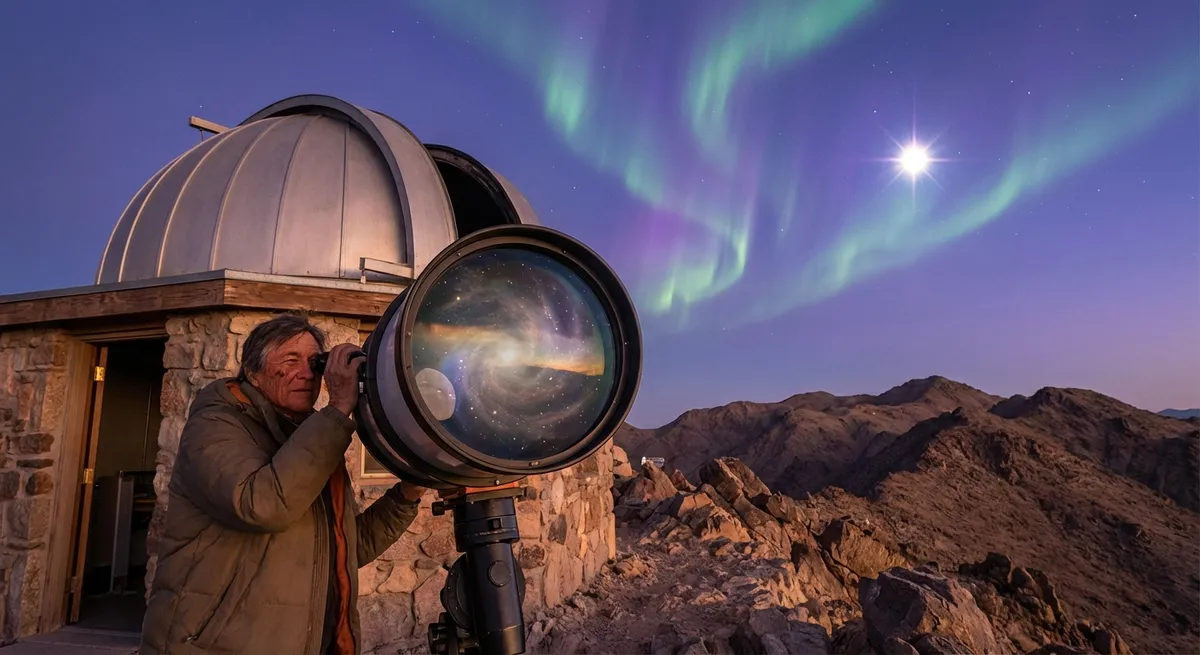
On smaller timescales, planets also experience solar storms and auroras, where charged particles from a star collide with atmospheric gases, making them glow. On Mars, the solar wind has gradually stripped much of the planet’s original atmosphere away, radically changing its climate. On Earth, powerful solar events can trigger auroras visible far from the poles and temporarily disrupt power grids and satellites.
Amazing Fact #5: In 1994, fragments of Comet Shoemaker–Levy 9 slammed into Jupiter, creating dark scars larger than Earth in the giant planet’s atmosphere. It was the first time astronomers directly watched the aftermath of a major impact on another planet in real time.
Why These One-Time Cosmic Events Matter
These brief, unrepeatable episodes are more than just cosmic spectacle. They are key experiments the universe runs for us—natural laboratories that reveal how gravity, nuclear physics, magnetism, and even spacetime itself behave under extreme conditions.
By catching supernovas, mergers, bursts, and tidal disruptions in the act, astronomers can:
- Measure cosmic distances and the expansion history of the universe
- Test Einstein’s theory of general relativity in the most intense gravitational fields known
- Trace where the elements in our bodies and technology were forged
- Map hidden black holes and compact objects we can’t otherwise see
- Reconstruct the violent early histories of planets and solar systems
We live in a quiet corner of space and time, but we are surrounded by ghostly evidence of one‑time events: expanding remnants of explosions, enriched elements in our rocks and blood, a Moon born from an ancient impact, gravitational waves still humming faintly through spacetime.
Every time our instruments pick up a transient flash or ripple from the deep sky, we’re intercepting a once‑ever message from a place and moment that will never exist again. In listening carefully to those messages, we’re learning not just how the universe behaves, but how fleeting, improbable, and astonishing our own existence really is.
Sources
- NASA: Supernova Explosions - Overview of how supernovas work and what Hubble has revealed about them
- LIGO Scientific Collaboration – Gravitational Wave Discoveries - Catalog of detected black hole and neutron star mergers and their significance
- NASA: Gamma-ray Bursts - Educational resource on GRBs and discoveries by the Swift mission
- NASA: Tidal Disruption Events - Explanation of how black holes tear apart stars and what we observe
- NASA: Comet Shoemaker–Levy 9 and Jupiter - Historical archive on the 1994 comet impact with Jupiter and its scientific impact
Key Takeaway
The most important thing to remember from this article is that this information can change how you think about Cosmic Events.