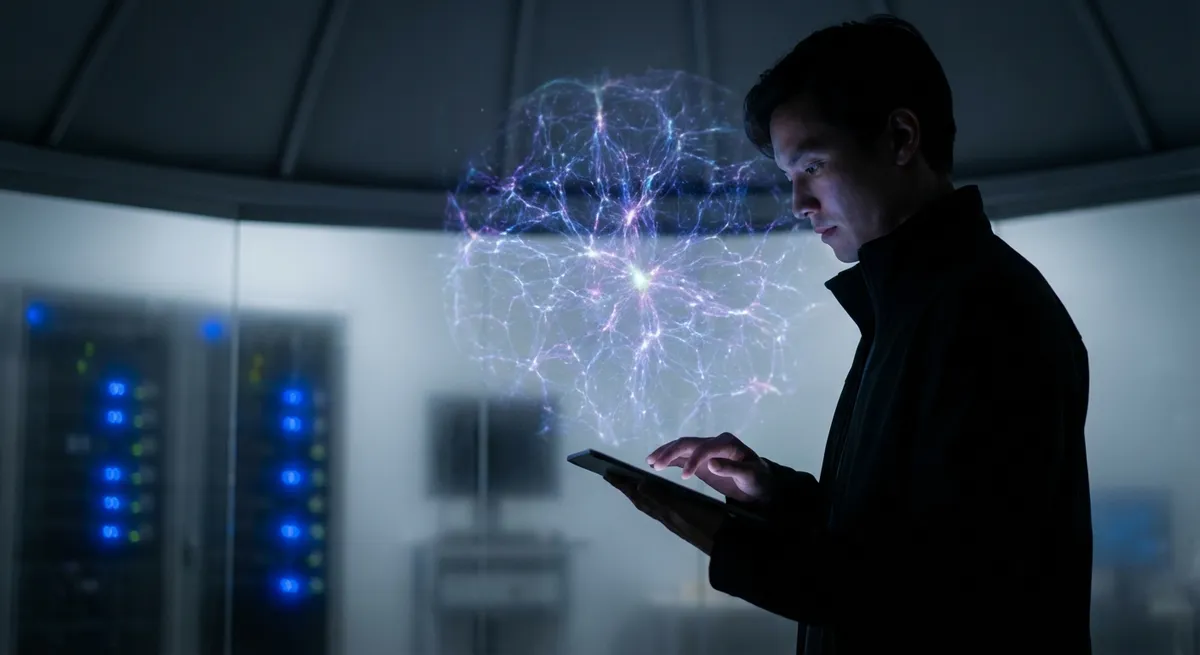
In the last few decades, astronomy has quietly added a new kind of instrument to its toolkit—one that doesn’t collect light, radio waves, or gravitational ripples. It collects possibilities. Supercomputers and sophisticated simulations now let scientists build digital universes, evolve them for billions of years in fast‑forward, and then compare those cosmic rehearsals with the sky we actually see.
This isn’t just a clever trick. It’s changing how we understand everything from the birth of galaxies to the weather on alien worlds. Below are five astonishing insights—from the structure of the cosmos to the chemistry of life—that we’ve gained by letting physics run wild inside the world’s fastest machines.
Simulating a Universe from Almost Nothing
Imagine starting with an almost perfectly uniform fog of matter, barely disturbed—tiny ripples frozen into space less than a second after the Big Bang. Now press “play” and watch 13.8 billion years unfold in a matter of days. That’s the basic idea behind large‑scale cosmological simulations like Illustris and its successor, IllustrisTNG.
These simulations begin with the conditions we infer from observations of the cosmic microwave background, the afterglow of the Big Bang. They include the main ingredients of the cosmos: normal matter (the stuff you and stars are made of), dark matter (which we can’t see, but whose gravity sculpts structure), and dark energy (which accelerates the expansion of space). Supercomputers then calculate how gravity, gas dynamics, star formation, and supermassive black holes interact over cosmic time.
The result looks uncannily like the actual universe: sprawling cosmic filaments, knots of galaxy clusters at their intersections, and vast empty voids in between. When astronomers “observe” these digital universes the same way we observe the real one, they find that the statistics of galaxy sizes, clustering, and motions closely match what we see through telescopes.
Amazing fact #1: We can grow a realistic universe inside a computer by feeding it just the laws of physics and the conditions moments after the Big Bang. That agreement between simulation and observation is a powerful, independent test that our basic picture of cosmology is on the right track.
Galaxies Aren’t Just Born—They’re Sculpted by Invisible Violence
Galaxies seem graceful from afar: spiral swirls, bright cores, and faint halos. In simulations, though, their evolution looks more like a long, chaotic struggle. Gravity tries to gather gas into stars; other processes push back, sometimes violently.
Supercomputer models show that without dramatic feedback—energy and material blasted back into space—galaxies would form far too many stars, too quickly. The universe would be overloaded with bright, massive galaxies that simply don’t exist. When researchers allow exploding stars (supernovae) and supermassive black holes to inject energy into surrounding gas, something remarkable happens: the simulated galaxy population suddenly starts to resemble reality.
Gas can be heated and thrown out of galaxies, only to fall back later and form a second or third “generation” of stars. Winds from star formation carve bubbles and cavities; jets from black holes blow out vast regions of gas, quenching star formation in giant galaxies. This constant give‑and‑take helps regulate how galaxies grow.
Amazing fact #2: Without the “invisible violence” from supernovae and black holes, computer universes produce galaxies that look nothing like ours. In other words, cosmic destruction is essential to creating the galaxy population we actually see in the night sky.
Dark Matter Leaves a Fingerprint We Can’t Fake
Dark matter refuses to reveal itself directly—it doesn’t emit, reflect, or absorb light. Yet its gravitational influence is so strong that it shapes the architecture of the cosmos. Simulations have become one of the main ways we test ideas about what dark matter could be.
If dark matter is “cold” (slow‑moving and clumpy), as our standard model suggests, then structures form from the bottom up: tiny clumps merge to form bigger ones, building galaxies and clusters over time. Computer models of cold dark matter predict a specific web‑like pattern of matter on large scales, and a swarm of small satellite galaxies around larger ones.
Observations with galaxy surveys and gravitational lensing—where light from distant galaxies is bent by intervening mass—line up well with the large‑scale predictions of these simulations. That agreement has ruled out many alternative dark matter models that would smooth out structure too much or produce a very different pattern of clustering.
At smaller scales, however, things get intriguing. Some simulations predict more small satellite galaxies around galaxies like the Milky Way than we actually observe, leading to questions about whether dark matter has additional properties—or whether physics of gas, star formation, and feedback can hide or erase these tiny galaxies.
Amazing fact #3: By growing universes under different dark‑matter rules, simulations can reject whole classes of invisible particles without ever detecting a single one directly. The pattern of structure in the sky acts like a cosmic fingerprint, telling us what dark matter can—and cannot—be.
Virtual Exoplanets and Weather on Worlds We Can’t See Clearly
While cosmological simulations handle the giant canvas of the universe, another branch of computational astronomy zooms in dramatically—to planets orbiting distant stars. Most of these exoplanets are just faint points of light, or even indirect wobbles in starlight. Yet simulations are turning those data points into rich, three‑dimensional worlds.
For close‑in exoplanets that are “tidally locked”—showing the same face to their star at all times—astronomers use global circulation models (similar to Earth’s climate models) to predict wind patterns, temperature maps, and even cloud formation. These models explain why some hot Jupiters appear brightest not at the point of maximum heating, but slightly offset: powerful winds can shift the hottest region away from the day‑side center.
Simulations also help interpret the faint fingerprints of molecules in exoplanet atmospheres. When starlight filters through a planet’s atmosphere during a transit, it carries clues about gases like water vapor, carbon monoxide, and methane. Computer models test which combinations of temperature, pressure, and composition can reproduce those observations, ruling out entire families of hypothetical atmospheres.
Amazing fact #4: For some exoplanets, we now have simulated weather maps—including jet streams, day‑night temperature contrasts, and cloud belts—even though those worlds appear as nothing more than a dim dip in starlight. Our understanding of distant planets is no longer limited to static dots; it includes moving winds and evolving climates.
Forging the Elements: Neutron Star Collisions and Cosmic Alchemy
You are, quite literally, built from the debris of stars and more exotic objects. Hydrogen and helium came from the Big Bang; carbon, oxygen, and many lighter elements formed in stellar cores; but many of the heaviest elements—gold, platinum, uranium—were a mystery for decades. Where did the universe do its heaviest alchemy?
Simulations of colliding neutron stars offered a compelling answer even before observations confirmed it. When two ultra‑dense neutron stars spiral together and merge, they fling out neutron‑rich matter at a significant fraction of the speed of light. Nuclear physics models running on supercomputers show that this ejecta is an ideal site for the rapid neutron‑capture process (r‑process), which builds many of the universe’s heaviest elements.
In 2017, gravitational‑wave detectors caught the spacetime ripples from a neutron star collision (GW170817), and telescopes across the spectrum watched the ensuing light show. The evolving colors and brightness of that “kilonova” matched the predictions from years of detailed simulations: heavy elements were indeed being forged in real time.
Amazing fact #5: Computer models of neutron star collisions correctly predicted the light signature of freshly minted gold and other heavy elements—before telescopes ever saw it. The jewelry we wear and some atoms in our bodies were once part of explosive events that match these simulated cosmic forges.
Conclusion
Astronomy used to be limited to what the sky gave us: starlight, radio waves, X‑rays, and now gravitational waves. Today, the discipline has a second universe to work with—one made of equations and code, running inside vast machine rooms. By building digital cosmoses and alien worlds, astronomers can conduct “what if” experiments the real universe will never stage on demand.
These simulations don’t replace observation; they sharpen it. When a virtual universe and the real one disagree, the gap points to missing physics or new phenomena. When they agree, we gain confidence that our understanding is on solid ground—from the behavior of invisible dark matter to the birth of galaxies and the chemistry of life‑bearing elements.
Every time a supercomputer spins up a new universe, it asks an audacious question: “If the laws of nature really are what we think they are… does the cosmos we know naturally emerge?” So far, the answer is often yes—but the most exciting discoveries come from the times it still says no.
Sources
- IllustrisTNG Project – Simulating the Formation of Galaxies – Overview of the IllustrisTNG cosmological simulations and how they model galaxy and large‑scale structure formation
- NASA: Dark Energy, Dark Matter – Background on dark matter, dark energy, and their role in the structure of the universe
- ESO: Gravitational Waves and Neutron Star Mergers – Summary of the GW170817 neutron star merger, kilonova observations, and heavy‑element production
- NASA Exoplanet Exploration Program – Current knowledge of exoplanets, including atmospheric characterization and climate modeling
- Princeton University: Cosmological Simulations – Research overview describing how large‑scale simulations are used to test cosmological models and dark matter scenarios
Key Takeaway
The most important thing to remember from this article is that this information can change how you think about Astronomy.